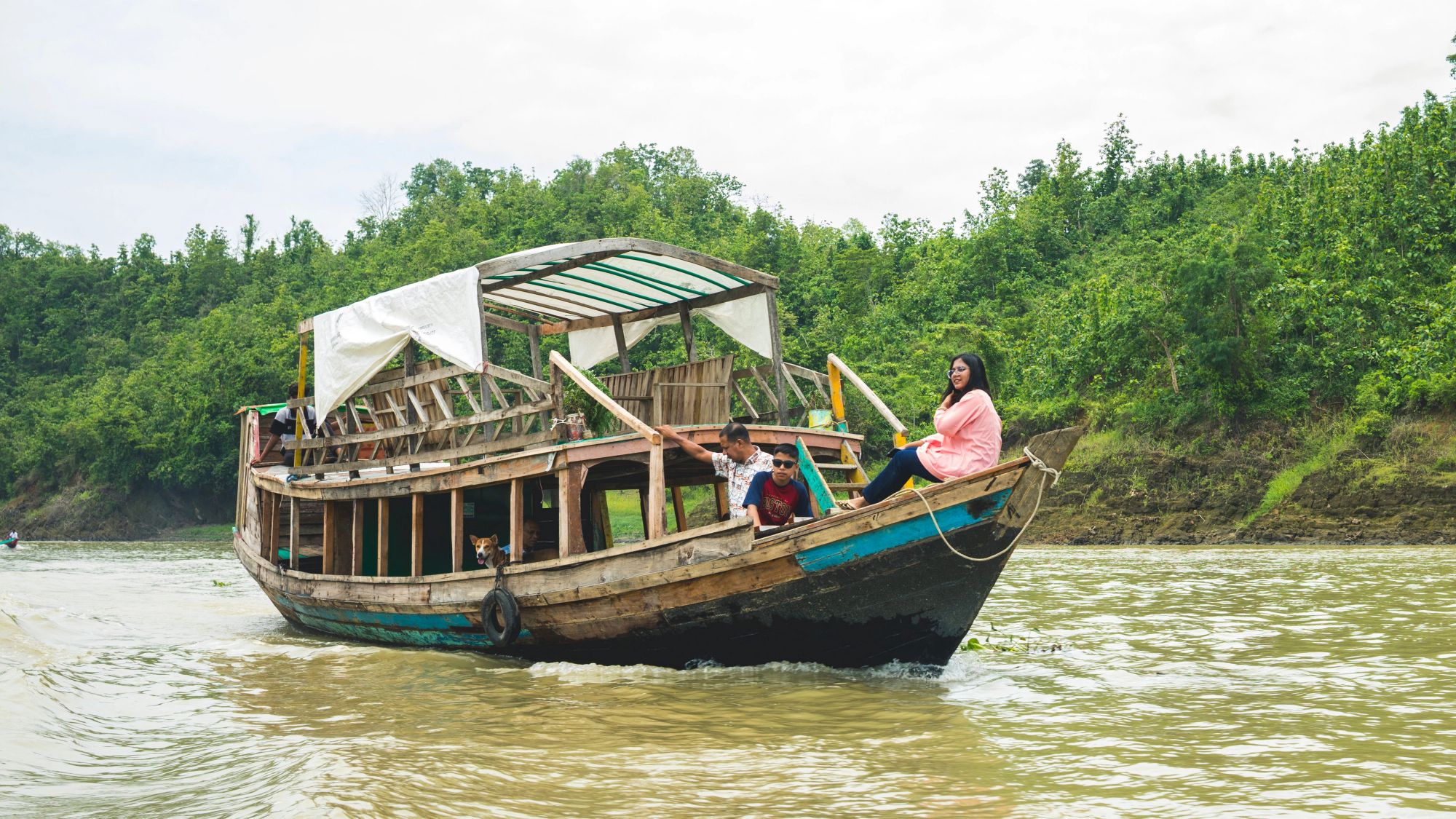
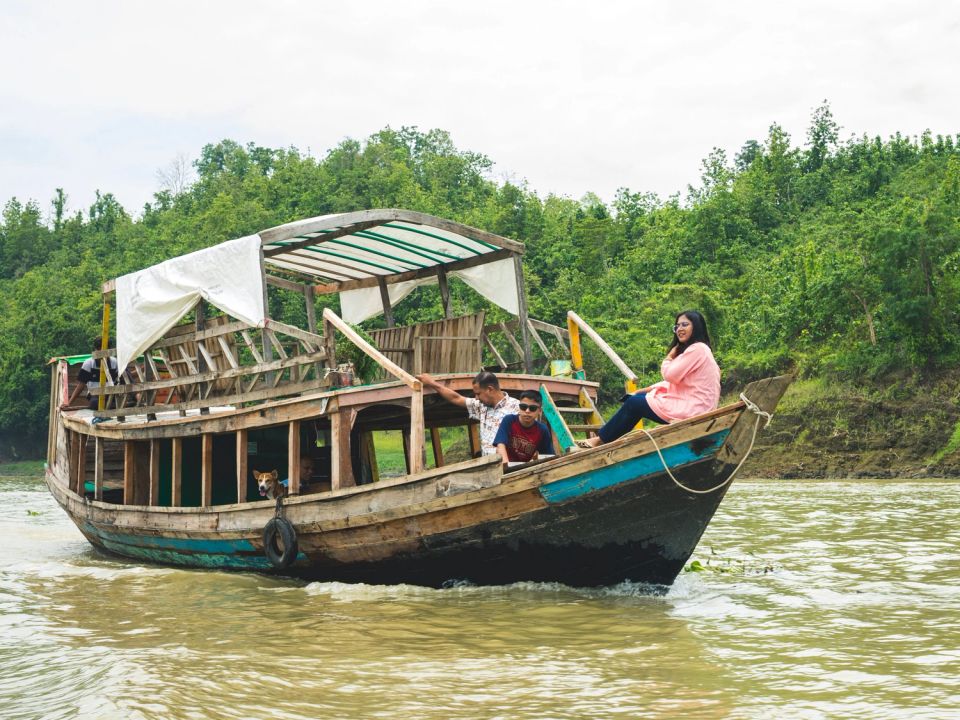
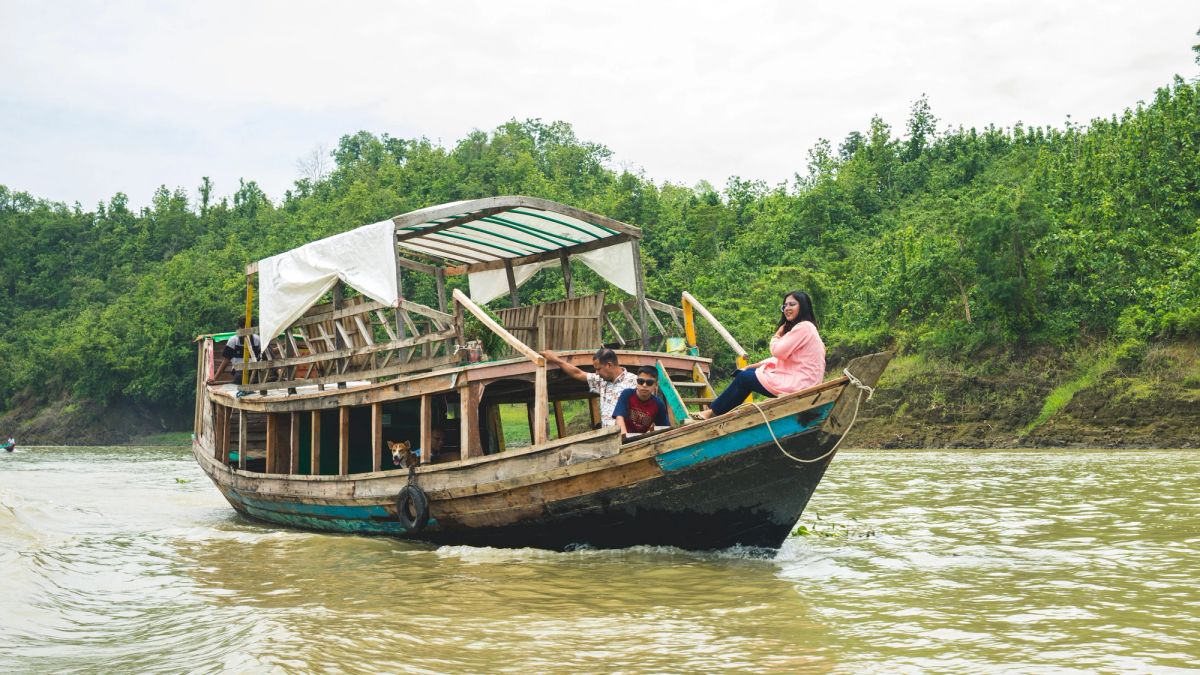
The Sundarbans is not somewhere you see from a single viewpoint and tick off. It is a maze of tidal rivers, creeks and mangrove forest that you move through slowly, mostly from the deck of a boat. That is exactly why going by ship works so well: your bedroom, dining room and viewing platform travel with you, and the forest comes to meet you at first light.
Leaving from Khulna
Most ship trips start in Khulna. Plenty of travellers take an overnight coach or train from Dhaka so they can board fresh in the morning, and since the Padma Bridge opened the road journey is far quicker than it used to be. You can also fly to Jashore and drive on to Khulna.
Once you sail, the ship usually heads down the Pasur river past Mongla port. Little by little the villages thin out and the banks turn into a solid green wall. Entering the forest needs Forest Department permission, and the operator normally arranges this along with a guide and an armed forest guard who stay with your group. Entry rules and seasonal closures do change, so Softway Travels checks the current position when you book.
Life on board
Ships range from simple launches with shared cabins and bathrooms to more comfortable vessels with attached bathrooms and a proper lounge deck. Whatever the level, meals are cooked on board, and fresh river fish and prawns tend to feature. Mobile signal fades once you are deep in the forest and power on board is often limited to certain hours, so expect to switch off a little.
A typical day runs something like this:
- Dawn: a quiet hour on deck with tea. This is often the best time for birds and for deer at the water's edge.
- Morning: a small-boat trip into a canal, or a short walk on a forest trail with the guard.
- Midday: lunch on board while the ship moves on to the next stop.
- Afternoon: another landing or canal trip, then sunset over the river.
- Evening: dinner, a sky full of stars and an early night, because tomorrow starts early again.
Into the canals by small boat
The best moments rarely happen on the big ship. It cannot enter the narrow creeks, so the crew lower small country boats and take you in, sometimes paddling the last stretch with the engine off. The forest closes in on both sides, you hear birds you cannot see, and the mud banks are busy with crabs and mudskippers.
Timing matters here. At low tide the mudflats are exposed, which is when crocodiles and monitor lizards are most likely to be out basking. Your guide reads the tide tables and plans the boat trips around them.
Keep your voice down in the canals. The quieter the boat, the more you will see.
Kotka, Kochikhali and what you might see
Two names come up on almost every itinerary. Kotka (often spelt Katka) has a forest station and a wooden watchtower, with a trail through the trees towards the beach on the Bay of Bengal side. Kochikhali is known for its open grassland, where herds of spotted deer graze in the early morning and late afternoon. Many trips also stop at Karamjal near Mongla, a short visit with a small crocodile breeding centre.
Spotted deer are the one sighting you can almost count on. Rhesus macaques, wild boar, monitor lizards and saltwater crocodiles are also common, and the birdlife is rich, from several kinds of kingfisher to white-bellied sea eagles. The Royal Bengal tiger is another matter: it lives here, but seeing one is rare. You are far more likely to spot pugmarks in the mud. Go for the forest itself, and treat a tiger as a once-in-a-lifetime bonus.
When to go
The most comfortable months are roughly November to February, when the air is cooler and drier and the rivers are calmer. From March it gets hot and humid. During the monsoon the water is rougher, rain is heavy and fewer trips run, and the forest authorities can restrict entry for parts of the year. Winter weekends and holidays fill up first, so book early if your dates are fixed.
What to pack
- Light layers plus a warm jacket for misty winter mornings on deck
- Closed shoes you do not mind getting muddy, and sandals for the ship
- Hat, sunglasses, sunscreen and insect repellent
- Binoculars and a camera with a zoom lens, kept in a small dry bag
- A torch, a power bank and a refillable water bottle
- Your personal medicines, and seasickness tablets if you need them
The forest asks a little of you in return. Throw nothing overboard, carry your plastic back, skip the loud music, never feed the animals and always stay with the guard on land.
Softway Travels can book a Sundarbans ship trip from Khulna with the permission, guide and meals arranged, and sort the journey from Dhaka too. If you want to compare it with other trips, browse our holidays.